Independent guide · Atlanta, GA
Car Repair and Mobile Mechanics in Atlanta: An Independent Guide
An independent guide for metro Atlanta drivers: warning signs, common repairs, mobile mechanics vs shops, Georgia emissions tests and breakdown safety.
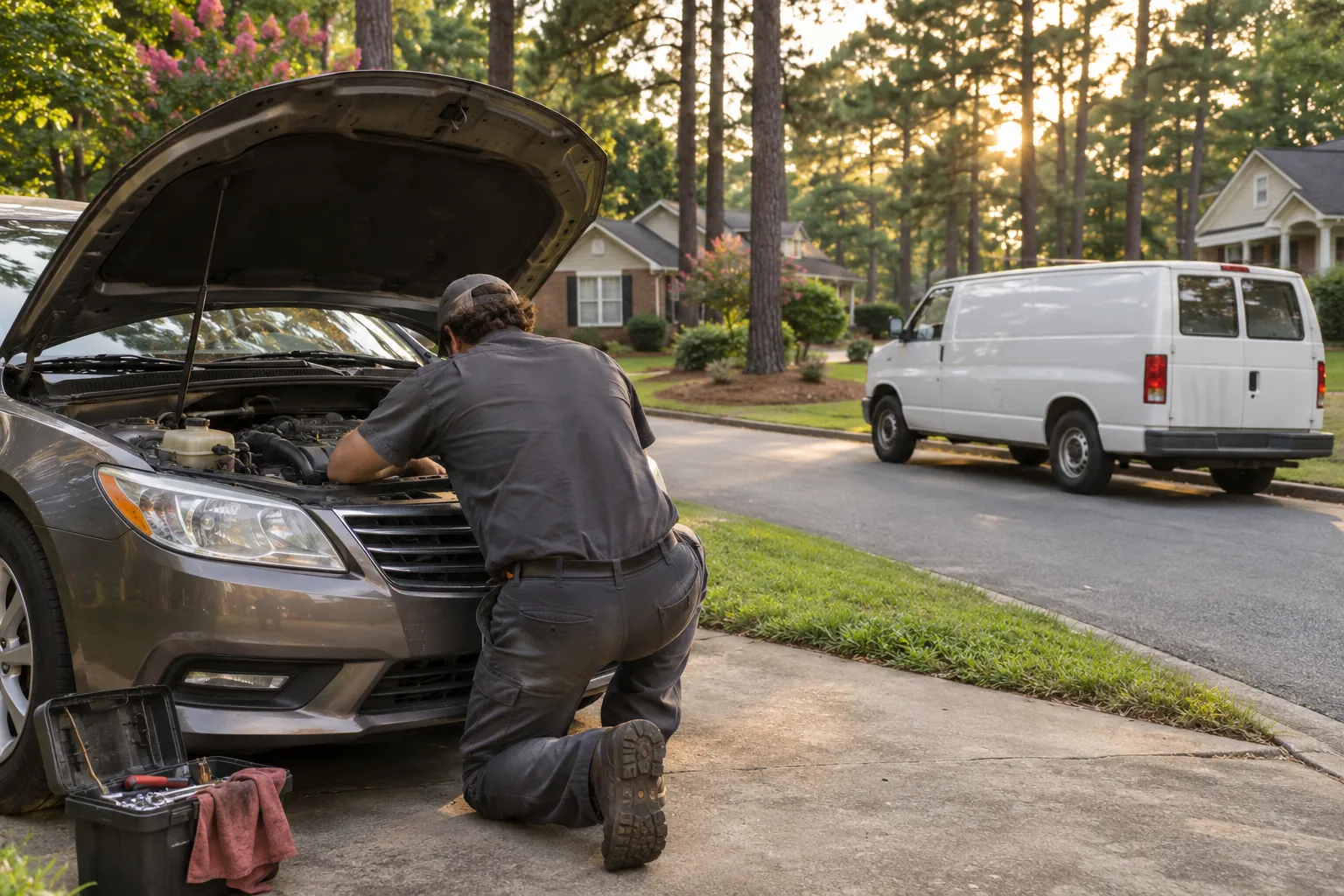
This is an independent guide to car trouble and car repair in metro Atlanta, Georgia. It explains what common warning signs mean, which repairs a mobile mechanic can handle in a driveway and which belong in a shop, how to check a technician before you hand over your keys, and what Georgia's rules say about emissions testing, used car purchases and breakdowns on the interstate. The pages are written to be read before you spend money or make a decision at the side of the road.
The site is not a repair business. It does not send mechanics, book appointments, quote prices or sell parts. It explains how things work so you can talk to real technicians, shops and sellers with more confidence.
Why a guide for metro Atlanta drivers
Driving around Atlanta puts its own kind of stress on a car. Long, humid summers bake batteries and push cooling systems hard. Stop-and-go traffic on I-285, I-75, I-85, I-20 and the Downtown Connector means engines idle in heat with little airflow and brakes do a lot of work. Spring pollen clogs cabin filters. Thirteen metro counties require an annual emissions inspection tied to registration. And because the metro area is so spread out, a breakdown often happens far from home, which is part of why mobile repair has become a common choice. General car advice rarely puts all of that together.
Mobile mechanics and repair shops
Mobile repair is convenient, but it has limits, and the person doing the work matters more than the van they arrive in.
- Mobile mechanic vs repair shop lists the jobs that suit a driveway and those that need a lift or specialized equipment.
- How to choose a mobile mechanic covers credentials, written estimates, warranties, red flags and what to do if a repair goes wrong.
Starting, charging and stopping
These are the problems that most often leave drivers stuck, and the ones where a quick diagnosis saves the most money.
- Car battery problems in hot weather explains why heat shortens battery life, how batteries are tested and how to choose a replacement.
- Alternator or starter helps you tell which part is failing from the symptoms, and what each repair usually involves.
- Brake warning signs sorts squeals, grinding, pulsing and soft pedals by urgency and explains what a brake job should include.
Heat, cooling and comfort
- What to do when your car overheats gives step-by-step actions for a temperature gauge climbing in traffic, plus the usual causes.
- Car AC not blowing cold covers refrigerant leaks, compressor and fan problems, the difference between R-134a and R-1234yf, and why recharge cans are a short-term fix.
Warning lights and drivetrain
- Check engine light explains steady versus flashing lights, common causes and why a code reading is not a diagnosis.
- Transmission problems describes slipping, harsh shifts, leaks and limp mode, and the repair options from fluid service to replacement.
Georgia rules and decisions
- Georgia emissions testing summarizes which counties and model years are tested, why cars fail, the free retest and repair waivers, based on Georgia's Clean Air Force.
- Used car pre-purchase inspection explains what an independent inspection covers and why it matters in a state where the lemon law applies only to new vehicles.
- Breaking down on an Atlanta interstate covers safety steps, the GDOT HERO program, and Georgia's laws on moving a car after a minor crash and moving over for responders.
Where to start
If something is wrong right now, go straight to the guide for the symptom: overheating, a warning light or a breakdown on the highway. If you are planning ahead, the battery, brake and emissions guides cover the maintenance that prevents most surprises. If you are about to hire someone, read the mobile mechanic guides first.
How the guides are written
Each page starts with a short answer and then explains the reasoning, so you can stop once you have what you need. Where a law, program or agency is involved, the guide names the official source, such as the Georgia Department of Transportation, Georgia's Clean Air Force, the Georgia Department of Law or the National Highway Traffic Safety Administration, and you should check current details there before acting. Prices appear only as rough ranges for orientation, and they vary by vehicle and provider. When a fact could not be confirmed, it was left out.
The information is general. Your owner's manual, a qualified technician who has seen your car and the written terms of any repair always take priority. Read about this guide to see how the site works and what it is not, and use the contact page to report an error or suggest a topic.