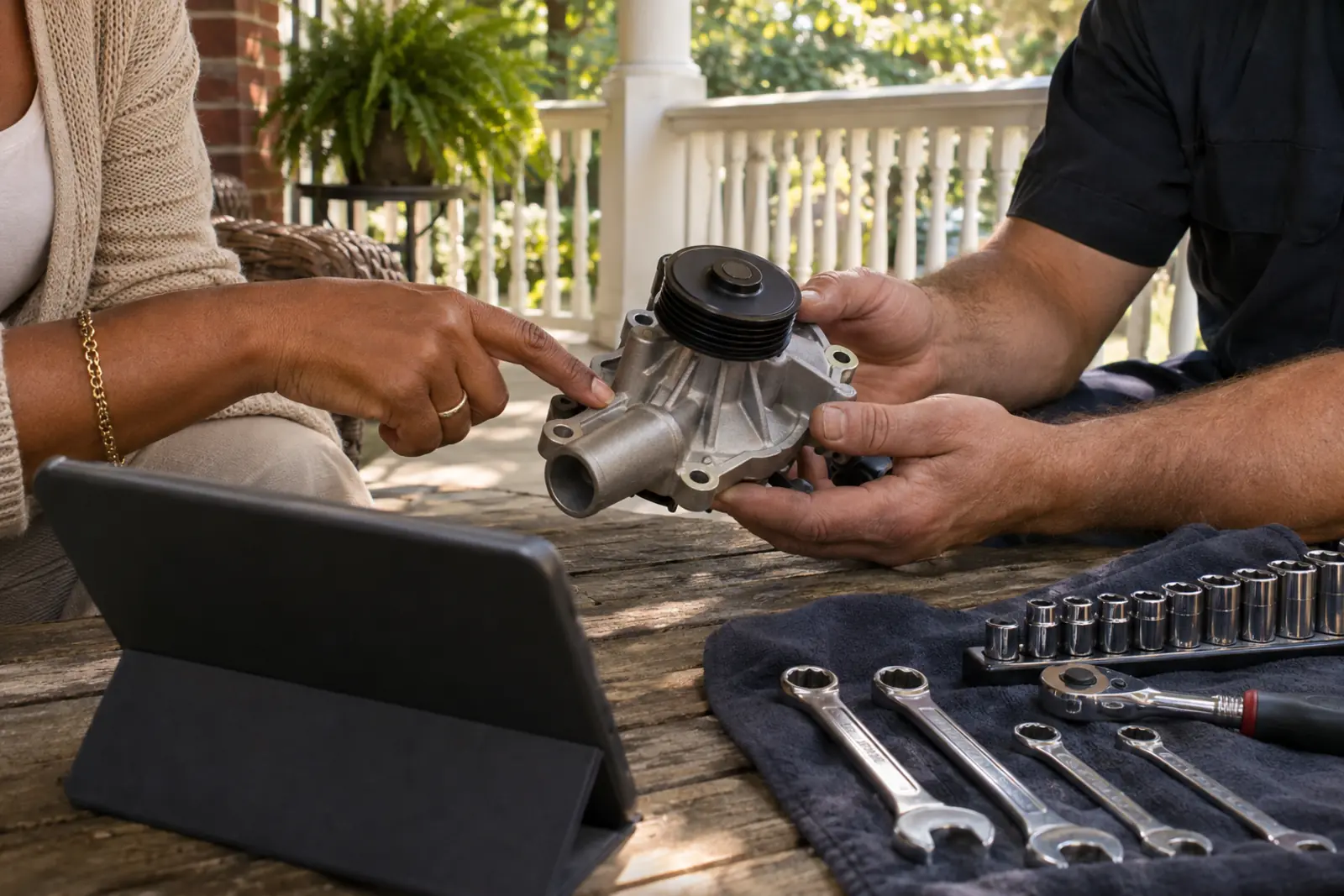
To choose a mobile mechanic in Atlanta, check four things before you book: that the person or company can show real credentials such as ASE certification, that they will give you a written estimate covering parts, labor and fees, that they explain the warranty in writing, and that their business is registered and reachable after the job is done. Georgia does not issue a general state license for auto mechanics, so these checks are how you separate an experienced technician from someone with a toolbox and an ad.
Are mobile mechanics reliable?
A mobile mechanic is as reliable as the individual doing the work, not because the repair happens in a driveway. The same technician can do a good job at a shop or in your parking space, and a poor one can do a bad job in either. What changes is the paper trail: a shop has a fixed address, while a mobile operator can be harder to find after the visit. That is why the checks below focus on credentials, written records and a warranty you can enforce.
Mobile work is a good fit for jobs that need hand tools and a diagnostic scanner, and a poor fit for work that needs a vehicle lift or heavy shop equipment. Before you book, make sure the job suits a driveway at all. The same checks apply when you are simply trying to find a good or trustworthy mechanic of any kind.
Why credentials matter more here
In some trades, a state license gives you a baseline. In Georgia, general auto repair is not licensed at the state level, which means anyone can advertise mechanical services. Certain specialized work is regulated: technicians who service vehicle air conditioning must hold EPA Section 609 certification, and emissions inspectors in the metro counties work under the state's inspection program. For ordinary repairs, though, the burden of checking falls on you.
ASE certification
The National Institute for Automotive Service Excellence (ASE) is the best-known independent certification for technicians in the United States. A technician earns it by passing tests in specific areas, such as brakes, electrical systems or engine performance, and documenting relevant work experience. According to ASE's work experience requirements, the experience needed for repair technician tests is one to three years depending on the test, and formal training can substitute for part of it. Certification is not permanent: ASE says an initial certification is good for five years, after which the technician must renew it by retesting or through ASE's renewal program. A technician can show you their certificate or credentials card, and you can ask which areas it covers. Certification in brakes says nothing about air conditioning, so match the area to the job.
Two limits are worth knowing. First, ASE states that it certifies technicians, not businesses, so a shop or van displaying an ASE logo does not mean the person under your hood holds the certification you need. Second, the Federal Trade Commission notes that certification alone is no guarantee of good or honest work. Treat it as one evidence point alongside the estimate, the reviews and the warranty.
ASE Blue Seal shops
ASE also recognizes businesses through its Blue Seal of Excellence program. For a repair business, ASE requires that at least 75% of the technicians who diagnose and repair vehicles are ASE certified and that each service area has at least one certified technician. A Blue Seal shop is a useful benchmark when you are weighing a mobile operator against a fixed shop, but a mobile mechanic without the recognition can still be well qualified if the individual credentials check out.
Manufacturer and specialist training
Some technicians trained at a dealership or specialize in particular makes, such as European cars. That training is valuable for vehicles with complex electronics, but ask what tools they carry. A European car may need a manufacturer-level scan tool to reset service lights, register a new battery or calibrate sensors after a repair.
The written estimate
A trustworthy estimate is specific. It should list:
- The repair being performed and the reason for it
- Each part, with brand or type (OEM, aftermarket, remanufactured)
- Labor hours and the hourly rate, or a flat labor price
- Trip, call-out, diagnostic, disposal and shop supply fees
- Sales tax
- What happens if additional problems are found once work begins
Ask the technician to contact you before doing any work beyond the estimate. The FTC's auto repair basics guide advises getting a signed copy of the estimate, making sure it says the shop will ask for your approval before work exceeds a set amount of time or money, and asking how labor is priced. A vague verbal quote such as "a few hundred dollars" leaves room for surprises. If the problem is not yet diagnosed, expect a diagnostic fee first, and ask whether it is credited toward the repair and whether you would owe it if you took the job elsewhere. For an expensive or complicated repair, the FTC suggests a second opinion. The guide to check engine light diagnosis explains why a code reading alone is not a diagnosis.
Red flags
| Warning sign | Why it matters |
|---|---|
| Full payment demanded before any work | Leaves you without leverage if the job is not done; a parts deposit for special-order items is more reasonable |
| Cash only, no invoice | No record for warranty claims, disputes or resale history |
| No business name or only a first name and phone number | Hard to follow up if the repair fails |
| Diagnosis given over the phone with confidence | Symptoms can point to several causes; a firm diagnosis needs testing |
| Pressure to approve extra work immediately | Legitimate safety concerns can be explained and documented |
| Refusal to return old parts | Seeing the old part is a reasonable request, except for parts returned for a core charge |
| Reviews that all appeared in a short burst | Can indicate purchased or fake reviews |
How to find a good mechanic: checking the business
The FTC recommends finding a repair provider before you urgently need one and asking people you trust for referrals. Whether you are choosing a mobile mechanic or a shop, these steps turn a recommendation into something you can verify:
- Look up the business registration. Companies such as LLCs and corporations are listed in the Georgia Secretary of State's business search. A registered entity is not proof of quality, but it shows a real legal business exists.
- Read reviews across several platforms. Look for detailed reviews describing specific jobs, and for how the business responds to complaints.
- Ask about insurance. A technician working on your property should carry liability coverage. You can ask for proof.
- Ask whether they have worked on your make and model. This matters most for European cars, hybrids and vehicles with advanced driver-assistance systems.
- Confirm the warranty in writing. Ask how long it lasts, whether it covers parts and labor, and who pays for a return visit.
- Start with a small job. An oil change, a battery swap or a brake inspection lets you judge punctuality, communication and honesty before you hand over a larger repair.
Common first jobs for a mobile technician include those where the symptom is clear but the cause is not yet known, such as battery problems in Atlanta heat, a car that will not start because of an alternator or starter fault, or brake warning signs. Reading those guides first helps you describe the problem accurately and recognize an inflated diagnosis.
Platforms versus independents
Several national apps connect drivers with mobile technicians and set prices up front. They can make booking and payment simpler, and they usually handle disputes through the platform. Independent mobile mechanics may offer more flexibility and a direct relationship. Neither is automatically better. Read the platform's terms on warranties and cancellations, and with an independent, rely on the checks above. Before booking either, read what a mobile mechanic can and cannot fix so you know whether the job suits a driveway at all.
During and after the visit
- Be present at the start, or reachable by phone, so the technician can ask questions.
- Ask to see the old part and have the problem explained. The FTC notes that state law may require shops to give replaced parts back on request.
- Test the repair before the technician leaves: start the car, check warning lights and take a short drive if appropriate.
- Ask for a final invoice that lists each repair, the parts and their cost, the labor charge and the odometer reading. The FTC recommends this kind of finished repair order.
- Keep the invoice with the vehicle records. It matters for warranty claims and when you sell the car.
If something goes wrong
Start with the technician or company, in writing, describing the problem and what you want done. Most disputes end there. If they do not, payment by credit card gives you the option of a chargeback dispute with your card issuer. The Georgia Department of Law's Consumer Protection Division accepts consumer complaints, and you can find its complaint process on consumer.georgia.gov. Small claims cases in Georgia are heard in magistrate court, and the FTC notes that a small claims case does not require an attorney. Keep estimates, invoices, messages and photos, since they are the evidence in any dispute.
If you are buying a used car rather than repairing one, the same checks apply to whoever performs the pre-purchase inspection.
Frequently Asked Questions
Do mechanics need a license in Georgia?
Georgia does not issue a general state license for auto mechanics. Technicians who service air conditioning need EPA Section 609 certification, and emissions inspectors work under the state program, but for most repairs credentials such as ASE certification are voluntary.
What does ASE certified mean?
It means the technician passed ASE tests in specific areas and documented relevant work experience. Ask which areas the certification covers, because each test applies to a particular system, such as brakes or electrical. ASE says certification lasts five years before it must be renewed, and that it certifies individuals rather than businesses.
Are mobile mechanics reliable?
They can be, but reliability depends on the individual technician and the job. Check credentials, insist on a written estimate and warranty, and confirm the business is registered so you can follow up if the repair fails. Jobs that need a lift or heavy shop equipment are better done at a shop.
How do I find a trustworthy mechanic?
Ask people you trust for referrals before you have an emergency, then verify the business: registration, credentials, reviews on more than one platform, insurance and a written warranty. Starting with a small job, such as an oil change, lets you test communication and honesty at low cost.
Should I pay a mobile mechanic up front?
A deposit for special-order parts can be reasonable, but full payment before any work begins is a warning sign. Paying by card after the job is finished gives you more protection.
How do I check if a mobile mechanic is legitimate?
Look for a registered business name, verifiable credentials, detailed reviews on more than one platform, proof of insurance and a written estimate and warranty. A first name and a phone number alone is not enough.
Where can I complain about a mechanic in Georgia?
Start with the business in writing. If that fails, consider a card chargeback, a complaint to the Georgia Department of Law's Consumer Protection Division, or a claim in magistrate court.